We are excited to announce The 3rd Universal Cup Finals, the play-off event for the third season of the Universal Cup. This document outlines the rules and procedures for qualification.
Qingyu✨ 的部落格
網誌
Tags
None
Qualification Rule of The 3rd Universal Cup Finals
By
Qingyu
The 2025 ICPC World Finals Baku Prediction Game (Rules Updated for WF contest)
By
Qingyu
World Finals 2025 Crystal Ball 🔮 Contest
According to tradition, we are going to host the World Finals 2025 Prediction Game.
Before the start of the contest session of The 49th ICPC World Finals, you can submit your predictions for the top 12 contestants in the upcoming competition.
You can make your predictions at: https://qoj.ac/voting_game/vote?competition=wf2025
The deadline to update your prediction is September 4th, 2025 at 3 P.M. (UTC +8). That is, the start of the contest session.
Rules:
You need to predict the 1st to 12th place winners. Each team can only be nominated once.
- For each contestant you nominate who finishes in the top 12, let $R$ be the actual rank of the contestant and $r$ be the rank you predicted, you earn $2 + (12 - |R-r|)$ points.
- You receive additional 2 points if you predicted the medal of that team correctly.
- You receive additional 2 points if you predicted the place of that team correctly. That is, you will get $2 + (12 - 0) + 2 + 2 = 18$ points for each exact prediction.
- For each contestant you nominate who finishes in the top 24 but not top 12, you earn 2 points.
- If you leave a rank blank (i.e., choose not to make a prediction for that rank), you receive 1 point for that empty slot.
Ranking:
Participants in the Prophet Game will be ranked first by their final score, and then by the time of last edit (earlier edits rank higher in case of a tie).
We will post the final leaderboard after the contest is over.
Famous Contest Series on QOJ
By
Qingyu
There are many well-known contest series created by individual author(s), such as the legendary ASC (Andrew Stankevich Contest) and the Yuhao Du Contest. These contests are renowned for their high-quality problems, and many participants enjoy the challenge of solving every problem in a series.
Since I couldn't find a suitable place to categorize and organize this list, I decided to write this blog instead. I'll continue to update it as new contests are released. Please also DM me if you wish to include your contests here!
Updates on the Problem Set
By
Qingyu
AC Rating
题目权重
为了反应一道题目的权重(其主要取决于题目的思考难度与实现难度),我们为每道题目赋予一个难度值 $D$,其为 $0 \sim 10$ 之间的整数。数值越大,代表该题目的难度越难。
由于难度的评价不可避免的带有评价人的主观理解,我们不可能严格定义出每个难度的范围。被评为同样难度的两道题目,擅长不同领域的选手尝试时的感受可能大相径庭。同时,一些题目的难度可能主要体现在思考难度,而另一些题目的难度则可能主要体现在实现难度。
在评价具有部分分的题目时,我们主要根据题目的通过难度进行评分,而部分分的获取难度仅作权重很低的参考。因此,一道题目可能会很轻易得到接近满分,但获得满分非常困难 —— 在这种情况下,这道题目的难度相对会很高。因此,在具有部分分的情况下,题目的难度并不能够反映选手的得分率。
大体上:
- 难度 0 :最简单的竞技题目,即使是没有任何算法竞赛经历的人士,在具备使用任意一种编程语言编写程序的能力下便可轻松通过,大致可对应 Codeforces 难度 800 ~ 1000 的题目,TopCoder SRM Div. 2 的 250 分题目,或是 AtCoder Beginner Contest 的第一道题目。
- Fibonacci Sequence (Yinchuan Regional 2019)
- Three Dice (Shandong Provincial 2023)
- 难度 1:需要选手具有一定时间的程序设计经验,或者需要使用初步的数学与简单的算法设计能力。不具备算法竞赛经历的选手仍可解决这些题目,但可能需要消耗一定的时间。大致可对应 Codeforces 难度 1000 ~ 1600 的题目,亚洲区域赛或 NERC 区域赛的签到题的难度,以及 AtCoder Beginner Contest 的前四道题目。
- Largest Digit (Jinan Regional 2023)
- Left Shifting 3 (Nanjing Regional 2024)
- Counter (Nanjing Regional 2023)
- 难度 2:具有一定竞技门槛的题目。题目考查了一些算法竞赛中常用的 trick,或者具备一定的思维难度。这一类题目可被定义为最低一档的「竞赛题」,未经训练的程序设计者在解决时会遇到许多困难。大致可对应 Codeforces 难度 1500 ~ 1900 的题目,亚洲区域赛或 NERC 区域赛区分铜牌队伍的题目的难度,以及 USACO Silver 难度的题目。
- Effective Management (Moscow Regional 2022)
- The Game (CCPC Final 2023)
- Mutating DNA (IOI 2021)
- Shortcut on Tree (The 3rd Universal Cup Semifinals)
- 难度 3:大致可对应 Codeforces 难度 1800 ~ 2400 的题目,ICPC 亚洲区域赛中区分铜牌 ~ 银牌队伍的题目的难度,以及通常 USACO 中 Gold 难度的题目。
- Colorful Graph 2 (CCPC Final 2023)
- Dot Product (EC-Final 2023)
- Birthday Gift (Nanjing Regional 2024)
- Binary Tree (Nanjing Regional 2024)
- Dreaming (IOI 2013)
- Detecting Molecules (IOI 2016)
- 难度 4:大致可对应 Codeforces 难度 2300 ~ 2800 的题目,USACO Gold ~ Platinum 题目,ICPC 亚洲区域赛中区分银牌 ~ 金牌队伍的题目,以及国际信息学奥林匹克竞赛(IOI)大多数年份中难度最低一档的题目。在国际信息学奥林匹克竞赛(IOI)中通过的选手数大约在 100,而在 Universal Cup 中出现时通常的 AC 数为 70 ~ 100+。
- Knapsack (Nanjing Regional 2023)
- Billboards (World Finals 2024)
- Mosaic (IOI 2024)
- Inversion (EC-Final 2022)
- Misspelling (JOISC 2022)
- Team Contest (JOISC 2022)
- Witnessing the Miracle (CCPC Final 2024)
- Connecting Supertrees (IOI 2020)
- 难度 5:大致可对应 Codeforces 难度 2600 ~ 3200 的题目,USACO Platinum 题目的难度,ICPC 亚洲区域赛中区分靠前金牌队伍甚至出线队伍区分度题目。在国际信息学奥林匹克竞赛(IOI)中通过的选手数通常在 50,在 ICPC World Finals 中出现时通常的 AC 数为 10 ~ 30,在 Universal Cup 中出现时通常的 AC 数为 20 ~ 50。
- Stations (IOI 2020)
- Catfish Farm (IOI 2022)
- Digital Circuit (IOI 2022)
- Souvenirs (IOI 2025)
- World of Rains (The 2nd Universal Cup Finals)
- Circular Matching (The 3rd Universal Cup Semifinals)
- Grand Finale (Nanjing Regional 2023)
- Swapping Operation (Guangdong Provincial 2023)
- Omniscient Artist (CCPC Final 2024)
- 难度 6:
“我是咋克,这题也太简单了,我一眼秒了。”大致可对应 Codeforces 难度 3000 ~ 3500 的题目,ICPC 区域赛中针对前若干名队伍所区分的题目,ICPC 全球总决赛(World Finals)针对奖牌区队伍所区分的题目,以及国际信息学奥林匹克竞赛(IOI)中取得金牌的区分度所对应的题目。在国际信息学奥林匹克竞赛(IOI)中通过的选手数通常在 10 ~ 20,在 ICPC World Finals 中出现时通常的 AC 数为 3 ~ 10,在 Universal Cup 中出现时通常的 AC 数为 10 ~ 30。- Overtaking (IOI 2023)
- Obstacles for a Llama (IOI 2025)
- Slay the Spire (The 2nd Universal Cup Semifinals)
- Bot Friends 2 (The 3rd Universal Cup Semifinals)
- Turn on the Light 2 (Jinan Regional 2023)
- Military Maneuver (Shenyang Regional 2023)
- 难度 7:
“我是咋克,这题也没啥难度啊,想一想就会做了。”大致可对应 Codeforces 难度 3500+ 的题目,ICPC 比赛中针对冠军队伍所区分的题目,以及国际信息学奥林匹克竞赛(IOI)中区分最顶尖的选手所对应的题目。在国际信息学奥林匹克竞赛(IOI)中通过的选手数通常在 0 ~ 5,在 ICPC World Finals 中出现时通常的 AC 数为 0 ~ 3,在 Universal Cup 中出现时通常的 AC 数为 1 ~ 10。- Tree (IOI 2024)
- Laser Strike (EGOI 2025)
- Bridging the Gap(World Finals 2022, 2023)
- Kindergarten (World Finals 2024)
- Link Cut Digraph (XIX Open Cup, Grand Prix of Zhejiang)
- Intro: Dawn of a New Era (Shenyang Regional 2023)
- 难度 8:
“我是咋克,感觉这题,有难度[咦]。是不是这么做的来着[可怜]。很难啊!!”国际信息学奥林匹克竞赛(IOI)中难度最高的一档题目,不太可能在 Codeforces 或 AtCoder 等短时间多题数的比赛中有选手解出。即使在大多数比赛,也几乎没有队伍或选手通过的题目。只有最强的选手有机会在赛时通过这些题目,且需要消耗可观的时间。在国际信息学奥林匹克竞赛(IOI)中通过的选手数通常在 0 ~ 1·,在 ICPC World Finals 中出现时通常的 AC 数为 0,在 Universal Cup 中出现时通常的 AC 数为 0 ~ 2。- Two Bullets (XXII Open Cup, Grand Prix of Daejeon)
- Knowledge-Oriented Problem (XX Open Cup, Grand Prix of Zhejiang)
- LCM Sum (XX Open Cup, Grand Prix of Zhejiang)
- Best Problem (The 1st Universal Cup, Grand Prix of Zhejiang)
- A Recurring Problem (World Finals 2023)
- Stack Management (Code Jam 2017 World Finals)
- Colorful Graph 3 (The 2nd Universal Cup Semifinals)
- Grid Points (Jinan Regional 2022)
- Hamilton Path (XIX Open Cup, Grand Prix of Zhejiang)
- 难度 9:
“我是咋克,看着不会做,我想想。”难度极高的题目,在 IOI 或 ICPC 中不可能会被任何选手解出。即便在 AtCoder World Tour Finals、Meta Hacker Cup、Universal Cup 等时间较长且具有许多高水平算法竞赛选手的赛场上,有经验的选手经过长时间也可能会遇到很多阻碍,几乎不具有通过的可能性。在 Universal Cup 中出现时通常的 AC 数为 0。- Robot Contest (IOI 2023)
- Crab's Cannon (Grand Prix of IMO)
- Interesting Game (XX Open Cup, Grand Prix of Zhejiang)
- Trails [A] (PA 2011)
- Rook Detection (Shenyang Regional 2023)
- Art of Data Structures (The 3rd Universal Cup Finals)
- 难度 10:
“我是咋克,这都能做吗,这么牛。”没有任何机会的题目。题目的难度极高,在任何比赛中都不会有选手能够在数小时内解出此题。在 Universal Cup 中出现时通常的 AC 数为 0。- Degree Sequence 3 (The 3rd Universal Cup Semifinals)
The 3rd Universal Cup Semifinals : Call for Tasks
By
Qingyu
On behalf of the Universal Cup, I am delighted to invite you to submit your task proposals for The 3rd Universal Cup Semifinals Call for Tasks. The 3rd Universal Cup Semifinals will serve as a qualifying contest to select the teams that will advance to the 3rd Universal Cup Finals, which is expected to be an onsite event in the beginning of 2026. The Semifinals is tentatively scheduled for the end of August, 2025. We anticipate selecting 10-15 high-quality tasks to create a contest experience comparable to the 2nd Universal Cup Finals.
We welcome task submissions across a wide range of difficulty levels and strongly encourage innovative problem ideas. While we cannot guarantee acceptance rates, please be aware that topics such as data structures and combinatorial counting are typically highly competitive and within much lower acceptance rates. We encourage you to consider exploring less common problem types.
If you wish to submit a problem, please send your proposal via email to [email protected]. Your submission should include a task statement, a brief editorial, and a list of conflicting individuals (i.e., anyone who knows any parts of the problem). Test data and standard solutions are not required unless the problem is accepted. For each problem we used, a compensation of 2500 CNY (or 300 USD) will be provided. The submission deadline is July 15, 2025.
If you have any questions or would like to receive updates regarding this event, please feel free to contact us. We eagerly look forward to your creative problem submissions and hope to see you at the 3rd Universal Cup Semifinals!
The 3rd Universal Cup Semifinals - Scientific Committee: Qingyu, jiangly, bulijiojiodibuliduo, quailty
Upgrade of QOJ Judging Server
By
Qingyu
On June 2, 2025, QOJ upgraded its judging server to enhance performance and reliability.
The server's CPU was upgraded from Intel(R) Xeon(R) Platinum 8370C to Intel(R) Xeon(R) Platinum 8570.
To evaluate the impact of this upgrade, we sampled 20 randomly selected accepted submissions (with a runtime of at least 1 second) and compared their performance on the old and new servers.
| Submission ID | Old Runtime | New Runtime | Difference |
|---|---|---|---|
| 1085643 | 1016 ms | 731 ms | -28.05% |
| 1085501 | 1285 ms | 1008 ms | -21.56% |
| 1085496 | 1849 ms | 1600 ms | -13.47% |
| 1085404 | 1584 ms | 1351ms | -14.71% |
| 1085109 | 2059ms | 1320ms | -35.89% |
| 1080028 | 6903ms | 6339ms | -8.17% |
| 1079903 | 1369ms | 1053ms | -23.08% |
| 1079641 | 1129ms | 1064ms | -5.76% |
| 1079530 | 3079ms | 2770ms | -10.04% |
| 1078786 | 1353ms | 1113ms | -17.74% |
| 1078745 | 2936ms | 2641ms | -10.05% |
| 1078744 | 8694ms | 5578ms | -35.84% |
| 1078736 | 1898ms | 1421ms | -25.13% |
| 1078699 | 1012ms | 907ms | -10.38% |
| 1078614 | 2026ms | 1708ms | -15.70% |
| 1078156 | 5551ms | 4553ms | -17.98% |
| 1077728 | 1663ms | 1335ms | -19.72% |
| 1077447 | 3691ms | 3542ms | -4.04% |
| 1077354 | 1446ms | 1115ms | -22.90% |
| 1077195 | 1616ms | 831ms | -48.58% |
Average: -19.44%; Weighted Average: -19.52%
We will not rejudge previously submitted solutions. As a result, older submissions displayed on the problem statistics page may appear disadvantaged . If you would like to see the updated performance of your past submissions, we recommend resubmitting them.
Additionally, since the new judging server is significantly faster, we may revise the time limits of certain problems—especially if the upgrade inadvertently caused unintended solutions to pass.
The 2nd Universal Cup Finals Analysis(草稿)
By
Qingyu
The 2nd Universal Cup Finals: Analysis Report
This is the draft of the problems of the 2nd Universal Cup Finals. We expect to officially release a version of this document in a few months. If you find an error, please send an e-mail to [email protected] or a private message to me (@Qingyu) about it.
The 2nd Universal Cup Finals - Schedule
By
Qingyu
Attachments
Overall Schedule
- To contestants: Please wear the blue hoodie on 19th, 21st and 23rd Feb, and the white one on 20th and 22nd Feb.
- To staff and volunteers: Please wear the red hoodie on 19th, 21st and 23rd Feb, and the green one on 20th and 22nd Feb.
| Wednesday February 19 – Registration | |||||||
| Start | End | Description | Location | Attendees | |||
|---|---|---|---|---|---|---|---|
| 13:00 | 21:00 | Check-in | Huawei Sanyapo Campus | All with badges | |||
| 18:00 | 21:00 | Team Photo | Prague Meeting Room, 3F, Building A1, Huawei Sanyapo Campus | UCup Finals Attendees | |||
| 20:00 | 20:30 | Welcome Party | |||||
| 20:30 | 22:00 | Holdem’s Night | |||||
| Thursday February 20 – City Tour | |||||||
| Start | End | Description | Location | Attendees | |||
| 08:00 | 10:00 | Breakfast | Amber Taste, The Amber House Songshan Lake Dongguan | All with badges | |||
| 10:00 | 11:00 | Transportation by bus | Hotel Lobby, The Amber House Songshan Lake Dongguan | ||||
| 11:00 | 21:00 | City Tour | Guangzhou | ||||
| Friday February 21 – Opening Ceremony / The 2025 Huawei Tech Arena Universal Cup Finals Challenge / Practice Session | |||||||
| Start | End | Description | Location | Attendees | |||
| 7:30 | 8:30 | Breakfast | Amber Taste, The Amber House Songshan Lake Dongguan | All with badges | |||
| 8:30 | 8:50 | Transportation to Xicun Campus | Hotel Lobby, The Amber House Songshan Lake Dongguan | ||||
| 08:50 | 10:30 | Opening Ceremony | Building M3, Huawei Xicun Campus | UCup Finals Attendees | |||
| 10:30 | 11:00 | Workstation Setup | |||||
| 11:00 | 16:00 | The 2025 Huawei Tech Arena Universal Cup Finals Challenge | |||||
| 16:45 | 17:45 | Practice Session | |||||
| 17:45 | 18:00 | Transportation to Sanyapo Campus | All with badges | ||||
| 18:15 | 19:30 | Dinner | Curitis Restaurant, Huawei Sanyapo Campus | ||||
| 20:30 | 22:30 | Table Tennis’ Night | Building B4, Huawei Sanyapo Campus | UCup Finals Attendees | |||
| Saturday February 22 – The 2025 Universal Cup Finals | |||||||
| Start | End | Description | Location | Attendees | |||
| 8:00 | 10:00 | Breakfast | Amber Taste, The Amber House Songshan Lake Dongguan | All with badges | |||
| 10:00 | 10:20 | Transportation to Xicun Campus | Hotel Lobby, The Amber House Songshan Lake Dongguan | ||||
| 10:30 | 16:30 | The 2025 Universal Cup Finals | Building M3, Huawei Xicun Campus | UCup Finals Attendees | |||
| 16:30 | 17:15 | Visit Tour in Xicun Campus | Huawei Xicun Campus | All with badges | |||
| 17:15 | 18:45 | Dinner | 10 Garden De Fribourg, Huawei Xicun Campus | ||||
| 18:45 | 19:00 | Transportation to Sanyapo Campus | |||||
| 20:00 | 22:30 | Video Game’s Night | Liberec Meeting Room, 2F, Building A1, Huawei Sanyapo Campus | UCup Finals Attendees | |||
| Sunday February 23 – Challenge Roadshow / The 2025 Universal Cup Conference for Competitive Programming / Closing Ceremony | |||||||
| Start | End | Description | Location | Attendees | |||
| 7:30 | 8:30 | Breakfast | Amber Taste, The Amber House Songshan Lake Dongguan | All with badges | |||
| 8:30 | 9:00 | Transportation to Xicun Campus | Hotel Lobby, The Amber House Songshan Lake Dongguan | ||||
| 09:00 | 12:00 | Challenge Roadshow | Building M3, Huawei Xicun Campus | ||||
| 12:00 | 13:00 | Lunch | KUNYU, Huawei Xicun Campus | ||||
| 13:30 | 16:35 | The 2025 Universal Cup Conference for Competitive Programming | Building M3, Huawei Xicun Campus | ||||
| 16:50 | 17:45 | Closing ceremony | |||||
| 17:45 | 18:00 | Transportation to Sanyapo Campus | |||||
| 18:30 | 20:00 | Farewell Dinner | No.1 Lake View Restaurant, Huawei Sanyapo Campus | ||||
| Monday February 24 – Checkout | |||||||
| Start | End | Description | Location | Attendees | |||
| All Day | Checkout | Huawei Sanyapo Campus | All with badges | ||||
Notice
- On February 19th, there is no group dining. You may order room service and we will cover the cost.
- For everyday’s breakfast, please use your room card to enter the dining room.
- For all transportation from Sanyapo Campus, please be at Hotel Lobby, The Amber House Songshan Lake Dongguan in time.
- If you encounter any unexpected circumstances, please contact volunteers immediately.
- To ensure the safety of all participants and the smooth operation of the event,
please strictly adhere to the on-site safety regulations.
- During the event, do not leave the designated area without permission, and refrain from climbing, chasing, using open flames, or engaging in any other behavior that may endanger yourself or others.
- All participants must follow the instructions of staff and volunteers, as well as comply with venue signage and safety notices.
- If any personal actions (such as ignoring warnings, unauthorized movement, or dangerous activities) result in personal injury, property damage, or other adverse consequences, the individual involved shall bear full responsibility for all resulting liabilities and losses.
- The event organizers will not be held accountable.
Programming Environment
- OS: Ubuntu 24.04.1 LTS
- Desktop: GNOME Flashback
- Editors: vi/vim, gvim, emacs, gedit, geany, kate
- IDEs: Eclipse, IntelliJ, CLion, PyCharm, RustRover, Code::Blocks, Visual Studio Code
- Contest Control System: DOMJudge 8.3.1
Languages
| Language | Version |
|---|---|
| C (gcc) | 13.2.0 |
| C++ (g++) | 13.2.0 |
| D (dmd) | 2.109.1 |
| Java (openjdk) | 21.0.4 |
| Kotlin (kotlinc) | 1.9.24 |
| Python (pypy3) | 7.3.15 with Python 3.9.18 |
| Rust (rustc) | 1.75.0 |
Conference Information
Linear Systems Surprises
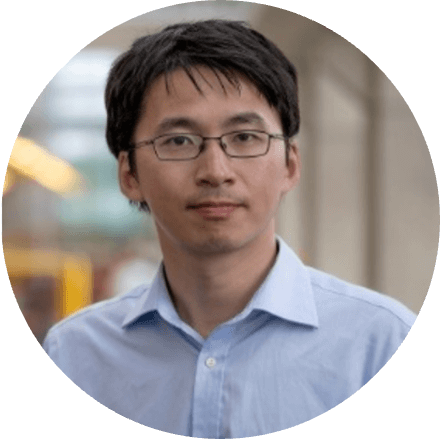
Presenter: __Richard Peng__
Abstract: Algorithms researchers strive to design better ways of solving problems that are central to many disciplines. Systems of linear equations arise throughout engineering and sciences in tasks ranging from physical simulation to data analytics. In many cases where linear systems don’t exactly model the problem, they provide the steps that lead to the solutions. Despite linear systems’ storied history spanning centuries, the current best algorithms for general linear systems, as well as many important subclasses, remain comparatively slow.
Over the last few decades, algorithms researchers developed entirely new approaches to solving linear systems. These progress led to accelerations in many applications, as well as entirely new theoretical frameworks for designing and analyzing algorithms. This talk will briefly overview some of the surprising ways of thinking about approximations, iterative convergences, and algebraic structures that originated from studying linear systems.
An Introduction to Symbolic Program Generation
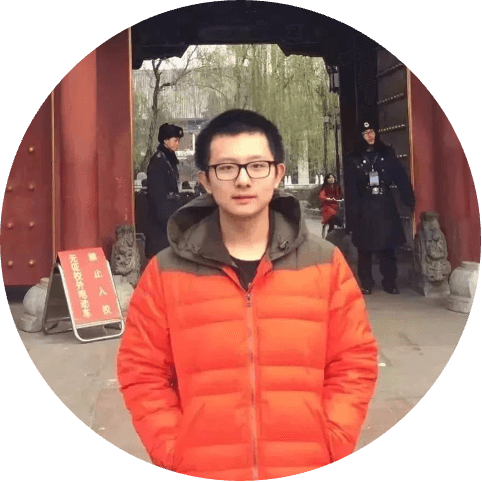
Presenter: __Ruyi Ji__
Abstract: Large Language Models (LLMs) have recently achieved remarkable success in program generation, particularly in competitive programming. For example, OpenAI reported that its o1 model achieved gold medal-level performance in last year's International Olympiad in Informatics (IOI), and its o3 model attained an estimated rating of ~2700 on Codeforces, ranking among top competitive programmers.
Despite these impressive milestones, current LLMs still suffer from several limitations. One major challenge is their inability to deduce general rules purely from examples, as their inference heavily depends on the presence of natural language. To address this limitation, symbolic approaches — representing a different paradigm of artificial intelligence — offer a complementary solution. Unlike LLMs, which rely on fitting vast amounts of data through large neural networks, symbolic systems represent knowledge via a small set of interpretable rules and perform reasoning by searching through combinations of these rules. While such systems are less effective at handling natural language, they excel at reasoning directly from structured examples.
In this presentation, I will provide an overview of symbolic program generation (i.e., program synthesis) and share recent progress in synthesizing efficient programs and complex algorithms.
Tight Bounds for Retrieval Data Structures By
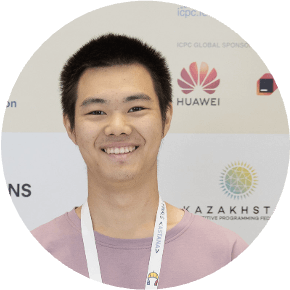
Presenter: __Tingqiang Xu__
Abstract: Retrieval data structures are data structures that answer key-value queries without paying the space overhead of explicitly storing keys. The problem can be formulated in four settings (static, value-dynamic, incremental, or dynamic), each of which offers different levels of dynamism to the user. In this presentation, I will talk about optimal bounds for the final two settings (incremental and dynamic) in the case of a polynomial universe. This complete a line of work that has spanned more than two decades, and also come with a surprise: the incremental setting, which has long been viewed as essentially equivalent to the dynamic one, actually has a phase transition, in which, as the value size v approaches log n, the optimal space redundancy actually begins to shrink, going from roughly n log log n (which has long been thought to be optimal) all the way down to Θ(n) (which is the optimal bound even for the seemingly much-easier value-dynamic setting).
Practice on medical LLMs
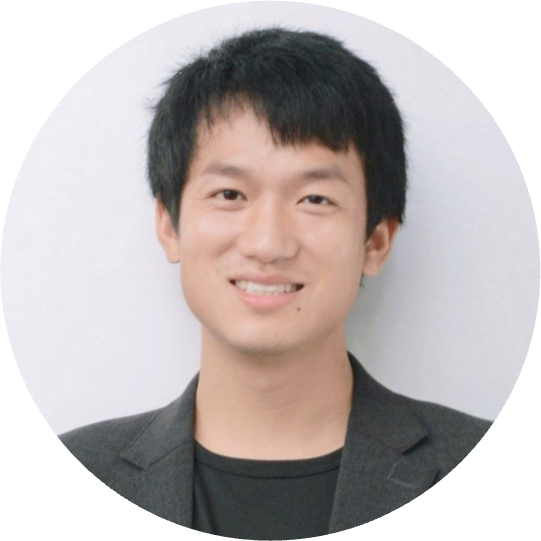
Presenter: __Benyou Wang__
Abstract: Recently, OpenAI's ChatGPT and various open-source community models, such as LLaMA 3, have significantly advanced the development of AI applications. In the medical field, both proprietary and open-source models hold great potential. However, when it comes to solving real-world medical problems, there is still a "last mile" to cover. In this Speech, we will introduce our team's development of the medical large language model, HuatuoGPT, and its multilingual and multimodal extensions, the Apollo series. We will also discuss the technical solutions for HuatuoGPT-o1, which aim to enhance the performance and interpretability of large language models, particularly in the context of longer diagnostic reasoning chains. Finally, we will look ahead to the future development of medical LLMs. Specifically, we will explore the potential of using AIGC technology to create a large number of patient agents to train both human and AI doctors. By doing so, we can accumulate real patient needs and doctor feedback, ultimately working towards the development of generalist medical artificial intelligence (GMAI).
The 2nd Universal Cup Finals - 比赛规则
By
Qingyu
第二届 Universal Cup 总决赛规则
最后更新:2025年2月21日
Qingyu - Universal Cup 执行委员会
English Version of this document can be found here.
Universal Cup 是一个致力于服务竞赛编程社区的组织,专注于提供高质量的训练资源并举办全球线下赛事。2025 年 Universal Cup 总决赛(即第二届 Universal Cup 总决赛)是本赛事第二赛季的最终比赛。
共有 20 支队伍通过在线比赛、半决赛或线下夏季峰会晋级,将争夺第二届 Universal Cup 冠军的头衔。
竞赛形式
- 竞赛时长为五小时。在不可预见的情况下,科学委员会主席有权修改竞赛时长。如竞赛形式或时长发生变更,参赛队伍将以统一方式及时获悉。
- 竞赛题目数量不少于 10 题,且不超过 14 题。
- 队伍可通过 Clarification Request 提交对题目可能存在错误的申诉。澄清请求必须仅使用英文撰写。
- 竞赛期间可能发布 Clarification,内容可能包括题目说明、附加细节、额外示例或对题目的修改(包括补充、删除或更改)。
- 所有 Clarification 信息均仅以英文提供,并会在竞赛现场统一公布。
题目
- 所有题目陈述仅提供英文版本。
- 参赛队伍可使用字典或在线翻译工具自行翻译题目内容,官方不提供翻译。
- 任何题目均不会提供部分分数。
- 竞赛题目类型包括:
- 标准输入/输出题:程序需从 标准输入 读取数据,并将结果输出到 标准输出。
- 交互题:程序需通过标准输入/输出与 交互器 进行交互。
- 多次运行题:程序将多次运行,每次使用不同的输入数据。
- 仅输出题:参赛队伍无需提交程序,仅提交最终答案。
提交与评测
- 竞赛评测平台采用 DOMjudge,一个开源自动化竞赛系统。
- 支持的编程语言包括 C、C++、D、Python 3、Java、Kotlin 和 Rust。
- 详细的语言版本与规格请参考 TechNote 文档。
- 每次提交的评测结果仅为通过(Accepted)或未通过(Rejected),不会提供部分分数或错误测试点编号。
- 未通过的提交将标记为以下之一:
- 编译错误(CE)
- 运行时错误(RTE)
- 时间超限(TLE)
- 结果错误(WA)
- 无输出(NO)
- 输出超限(OLE)
计分、排名与奖项
- 队伍按照解题数量进行排名,解出相同题目数量的队伍按照 罚时 进行排名。
- 如罚时相同,则按 最后一个通过题目的提交时间 进行排名。如果仍有相同,将按照以下方式,直到决出所有相同队伍的名次:
- 所有排名相同的队伍将按照他们的 最后一次通过提交的提交时间(精确到毫秒) 排名。该时间越早的队伍排名越高。没有通过任何题目的队伍的时间被视为
00:00:00.000 - 如果仍有相同,这些排名相同的队伍将会按照他们在第 2 届 Universal Cup 中的 rating 进行排名。
- 如果仍有相同,一道用于打破平局的额外题目将决定这些排名相同的队伍的排名。
- 如果仍有相同,将通过抽签决定这些队伍的排名。
- 所有排名相同的队伍将按照他们的 最后一次通过提交的提交时间(精确到毫秒) 排名。该时间越早的队伍排名越高。没有通过任何题目的队伍的时间被视为
- 罚时 计算方式为 所有解出的题目的耗时总和 加上 该题目的额外罚时。
- 题目的耗时是指从竞赛开始到首次通过该题的提交时间,以分钟计算。
- 题目的额外罚时为 20 分钟 乘以 首次通过前所有未通过的提交次数(编译错误除外)。
- 未解决的题目不计算罚时。
- 比赛进行 4 小时后,实时排名将被冻结,之后的提交结果将在榜单上显示为“待定”。
- 金牌将会颁发给比赛中获得前三名的队伍(共三名)。
- 银牌将会颁发给比赛中获得第四名至第七名的队伍(共四名)。
- 铜牌将会颁发给比赛中获得前八名至第十二名的队伍(共五名)。
- 科学委员会主席有权决定为队伍颁发额外的奖牌。
竞赛环境
- 每支队伍仅配备 一台计算机。
- 所有队伍的计算机配置相同。
- 队伍可自带 鼠标、键盘 或 手写板 进入比赛区域,但不保证所有外接设备都能正常使用。
- 队伍不得携带 个人计算机、手机、计算器 或其他电子设备进入比赛区域。
- 技术委员会有权检查队伍携带的外接设备。如有争议,技术委员会主席的决定为最终裁决。
- 参赛队伍可浏览互联网以获取任何资料。
- 竞赛期间,禁止与队伍以外的任何人交流。
- 任何在互联网上分发题解、代码或辅助程序的行为均被严禁。
- 参赛队伍不得提交恶意代码,包括但不限于攻击评测系统或恶意占用评测资源。
- 在科学委员会主席指示前,不得触碰比赛工作站的任何设备。
申诉
- 参赛队伍可对题目内容、提交评测结果或竞赛相关决定提出申诉。
- 申诉内容必须仅使用英文撰写。
- 评测裁判将对申诉做出决定,可能会调整竞赛期间的评测结果。
- 如果对裁判决定仍有异议,可向 Universal Cup 科学委员会主席提交最终申诉。
- 科学委员会主席的决定为最终裁决。
竞赛委员会
科学委员会
- 主席: Qingyu
- 副主席: jiangly
- 委员: bulijiojiodibuliduo, quailty, Heltion, Lynkcat
技术委员会
- 主席: Qingyu
- 委员: cubercsl, dup4, Tangent
组织委员会
- 主席: chenjb
The 2nd Universal Cup Finals - Competition Rules
By
Qingyu
The 2nd Universal Cup Finals Rules
Last update: Feb 21, 2025
The Universal Cup Executive Committee
本文档的中文版本可以在这里查看。
The Universal Cup is an organization aiming at serving the competitive programming community, dedicated to provide high quality training resources and host onsite global events. The 2025 Universal Cup Final Contest (or The 2nd Universal Cup Finals) is the final contest of the 2nd season of our event.
A total of 20 teams have qualified through online competitions, semifinals, or onsite summer summits to compete for the title of The 2nd Universal Cup Champion.
Contest Format
- The competition will last five hours. The Chair of the Scientific Committee has the authority to modify the contest duration in the event of unforeseen circumstances. If any changes occur regarding the contest format or duration, participants will be notified in a timely and uniform manner.
- There will be at least ten (10), but no more than fourteen (14) problems in the contest.
- Teams may submit claims regarding potential mistakes in a problem via a clarification request. Clarification requests must be written in English only.
- Clarifications may be issued during the competition. These clarifications may include explanations of problem statements, additional details, extra examples, or modifications to a problem (including additions, removals, or changes).
- All clarifications will be provided in English only, and notifications will be announced at the competition venue.
Problems
- All problem statements will be provided in English only.
- Teams may use dictionaries or online translation tools to translate the statements into other languages. No official translations will be provided.
- No partial scores will be awarded for any problem.
- The types of problems in the competition include:
- Standard I/O problem: Your program must read input from the standard input and write output to the standard output.
- Interactive problem: The program interacts with an interactor through standard I/O.
- Multiple-Run Problem: The program will be executed multiple times, each with a different input.
- Output-Only Problem: Teams do not submit a program but instead submit the final answers directly.
Submissions
- The judging platform of the competition is DOMjudge, an open-source automated system to run programming contests.
- The supported programming languages include C, C++, D, Python 3, Java, Kotlin, and Rust.
- The detailed language specifications should be referred to in the TechNote document.
- Each submission is judged as accepted or rejected. No partial scores or failed test ID will be given to the teams.
- Rejected runs will be marked with one of the following:
- Compilation Error (CE)
- Runtime Error (RTE)
- Time Limit Exceeded (TLE)
- Wrong Answer (WA)
- No Output (NO)
- Output Limit Exceeded (OLE)
Scoring, Ranking, and Awarding
- Teams are ranked according to the most problems solved.
- Teams who solve the same number of problems are ranked first by the least penalty, with the following tie-breakers in order:
- the tied teams will be ranked according to their last AC time, in milliseconds. Teams has the earlier last AC time will be ranked higher. Teams did not solve any problems will have the last AC time as
00:00:00.000. - if there is still a tie, the tied teams will be ranked according to their ratings on The 2nd Universal Cup.
- if there is still a tie, the tied teams will be ranked according to an additional play-off task.
- if there is still a tie, a lucky draw will determine the ranking of all tied teams.
- the tied teams will be ranked according to their last AC time, in milliseconds. Teams has the earlier last AC time will be ranked higher. Teams did not solve any problems will have the last AC time as
- The penalty is the sum of the time consumed for each problem solved plus the penalty in that problem.
- The time consumed for a solved problem is the time elapsed from the beginning of the contest to the submission of the first accepted submission, in minutes.
- The penalty in a problem is twenty (20) minutes times the number of non-accepted submissions before the first accepted submission, excluding the ones with a compilation error verdict.
- There is no time consumed for a problem that is not solved.
- The leaderboard will be frozen 4 hours after the contest starts, and the results submitted after 4 hours will be shown as pending on the leaderboard.
- Gold Medals will be awarded to the Top 3 teams (1st, 2nd, and 3rd places).
- Silver Medals will be awarded to the Next 4 teams (4th to 7th places).
- Bronze Medals will be awarded to the Next 5 teams (8th to 12th places).
- Additional Medals might be awarded at the decision of Chair of the Scientific Committee.
Contest Environment
- Each team will be provided with one computer only.
- All teams will have equivalent computing equipment.
- Teams may bring their own mouse, keyboard, or graphics tablet to the contest area. However, it is not guaranteed that all the external devices could work properly on your workstation.
- Teams may not bring their own computers, smartphones, calculators, or other electronic devices to the contest area.
- The Technical Committee may inspect the external devices brought by a team before the contest. In case of ambiguity, the decision of the Chair of the Technical Committee shall be final.
- Teams are allowed to browse the Internet to access any materials.
- Teams are prohibited from communicating with anyone outside their team during the contest.
- The distribution of any problem-solving materials, including ideas, codes, or auxiliary programs, on the Internet is strictly forbidden.
- Teams may not submit malicious codes, including but not limited to attacks on the judging platform and malicious occupation of evaluation system resources.
- Do not touch anything at the team workstations until so directed by the Chair of the Scientific Committee.
Appeal
- Teams may submit an appeal regarding potential mistakes in any problems, verdicts of the submissions, or other contest decisions.
- Appeals must be written in English only.
- Judges will give a decision to an appeal, which might change a verdict given during the contest.
- If you are still not satisfied with the results given by the judges, you may file a final appeal with the Universal Cup Scientific Committee.
- The decision of the Chair of the Scientific Committee shall be final.
Competition Staff
Scientific Committee:
- Chair: Qingyu
- Deputy Chair: jiangly
- Members: bulijiojiodibuliduo, quailty, Heltion, Lynkcat
Technical Committee:
- Chair: Qingyu
- Members: cubercsl, dup4, Tangent
Organizing Committee:
- Chair: chenjb
共 79 篇博客